

There’s a phrase many patients know all too well: “You don’t have enough bone for implants.” For those who hear it, it often means thinking they must give up on a fixed smile, on eating without worrying, on feeling like themselves again. Today we can say something different: that phrase doesn’t have to be the final word.
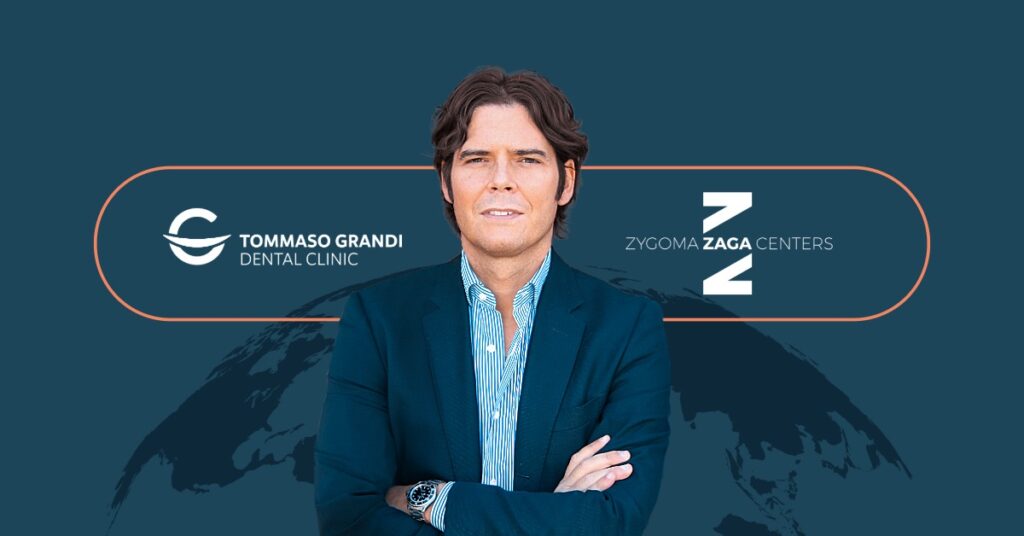
Tommaso Grandi Dental Clinic has joined ZAGA Centers, the international network dedicated to implant rehabilitation in cases of severe upper jaw atrophy. It is an important recognition, but above all it is concrete news for anyone who has so far felt doors closing.
In short: being a ZAGA Partner means offering a personalised treatment pathway in Modena for patients with severely reduced bone, with access to advanced techniques such as zygomatic, pterygoid and trans-sinus implants – a real alternative to traditional bone grafting, where indicated.
What ZAGA is, in simple terms
ZAGA stands for “Zygoma Anatomy-Guided Approach“, a method developed by Dr Carlos Aparicio over more than 25 years of clinical work. The underlying idea is simple to understand and less common to find: the patient shouldn’t have to adapt to a standard technique; the treatment should be built around their anatomy.
The principle behind the method
Every mouth, every bone and every medical history is different. The ZAGA network brings together clinicians who share this way of working: first study the person, then decide how to treat – never the other way round.
Why this recognition
It didn’t happen by chance. Dr Tommaso Grandi has dedicated years to study and scientific publication on complex implantology, immediate loading, and rehabilitation with zygomatic, pterygoid and trans-sinus implants for patients with severely reduced bone.
A facility designed for complex cases
Behind this path there is also a facility designed to genuinely handle difficult cases: two ISO 7 operating theatres, three-dimensional diagnostic equipment, an in-house Dental laboratory and a team that follows the patient step by step. Each year more than 7,000 implants are placed at the Clinic, with around 90 full-arch rehabilitations a month – many of them cases that had been described elsewhere as “too complex”.
What changes for you as our patient
Being a ZAGA Partner isn’t just a title. It’s a different way of caring for the people who come to the Clinic, which includes:
- a careful, tailored assessment of your situation;
- a three-dimensional study of your anatomy, with dedicated diagnostic tests;
- a treatment plan based on your actual clinical condition, not on a fixed template;
- specific expertise in the most severe bone deficiencies;
- access, where indicated, to advanced solutions such as zygomatic, pterygoid and trans-sinus implants;
- ongoing exchange with a specialised international network;
- facilities and technology designed for more complex procedures;
- care from a multidisciplinary team, from first diagnosis to final rehabilitation.
The aim is never to apply the same solution to everyone. It’s to find the right one for you – the least invasive possible, consistent with your anatomy and your health.
Would you like to know whether you’re a candidate for an advanced solution? Request a first assessment at grandiclinic.com.
If you’ve been told “there isn’t enough bone”
Severe upper jaw atrophy rarely means having to give up on fixed teeth. Today advanced implantology offers options that didn’t exist a few years ago – but it takes the right experience to recognise them and carry them out safely.
Zygomatic and pterygoid implants: how they work
Zygomatic implants, for example, are anchored in the cheekbone and may be a solution when the upper jaw has lost much of its structure. Pterygoid implants and other remote anchorage techniques open up further possibilities, always where clinical conditions allow.
Not every patient needs the same treatment, and not everyone is a candidate for these procedures. That’s why a specialist assessment and a thorough study of the CT scan always remain the first step.
Frequently asked questions
The amount of bone needed varies from person to person and depends on the area to be treated. When available bone is limited, there are still advanced solutions – such as zygomatic or pterygoid implants – that can avoid or reduce the need for traditional bone grafts. Only an assessment with a CT scan can determine the right approach for your case.
They are longer than traditional implants and are anchored in the cheekbone rather than the upper jaw. They are designed for patients with severe upper jaw bone atrophy, when conventional implant techniques aren’t feasible without major preliminary grafting.
ZAGA (Zygoma Anatomy-Guided Approach) is a protocol that adapts treatment to the patient’s specific anatomy, rather than applying a standardised technique to every case. It was developed by Dr Carlos Aparicio on the basis of more than 25 years of international clinical experience.
It means being part of an international network of centres selected for specific expertise in severe upper jaw atrophy, with ongoing exchange between clinicians, continuous training and access to specialist clinical protocols for more complex cases.
An international recognition, the same commitment
Joining the ZAGA network strengthens the Clinic’s presence in the international field of advanced implantology. But for us it is above all a commitment: to keep investing in research, training and technology, so we can offer each patient the treatment pathway most suited to them.
If you’ve received a complex diagnosis, or you too have been told you don’t have enough bone for implants, a specialist assessment can help you find out what is really possible in your case.