

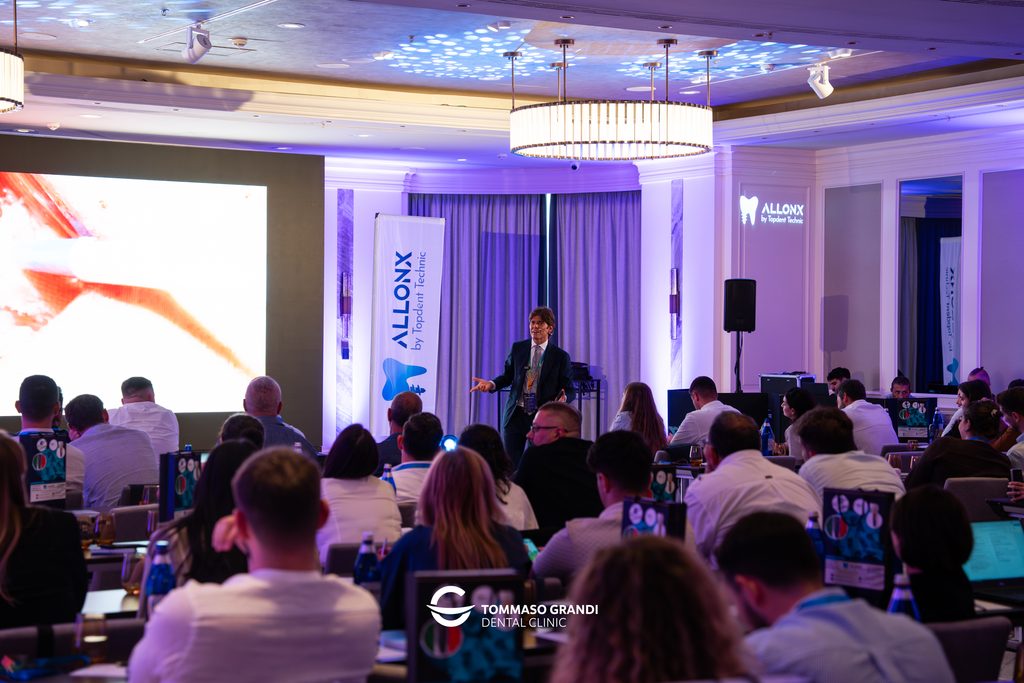
Dr Tommaso Grandi was a speaker in Bucharest at the JDentalCare Maxilla-For-All Elite Summit 2026, an international event dedicated to advanced implantology and the management of complex full-arch rehabilitation.
The Summit, held on 13 September 2026 at the JW Marriott Bucharest Grand Hotel, brought together more than 120 surgeons from Romania and the Republic of Moldova, creating a day of training and discussion focused entirely on new treatment possibilities in cases of significant bone deficiency.
At the heart of the event was Dr Grandi’s talk on the Maxilla-For-All protocol and the surgical strategies that may be considered when conventional full-arch treatment is not enough.
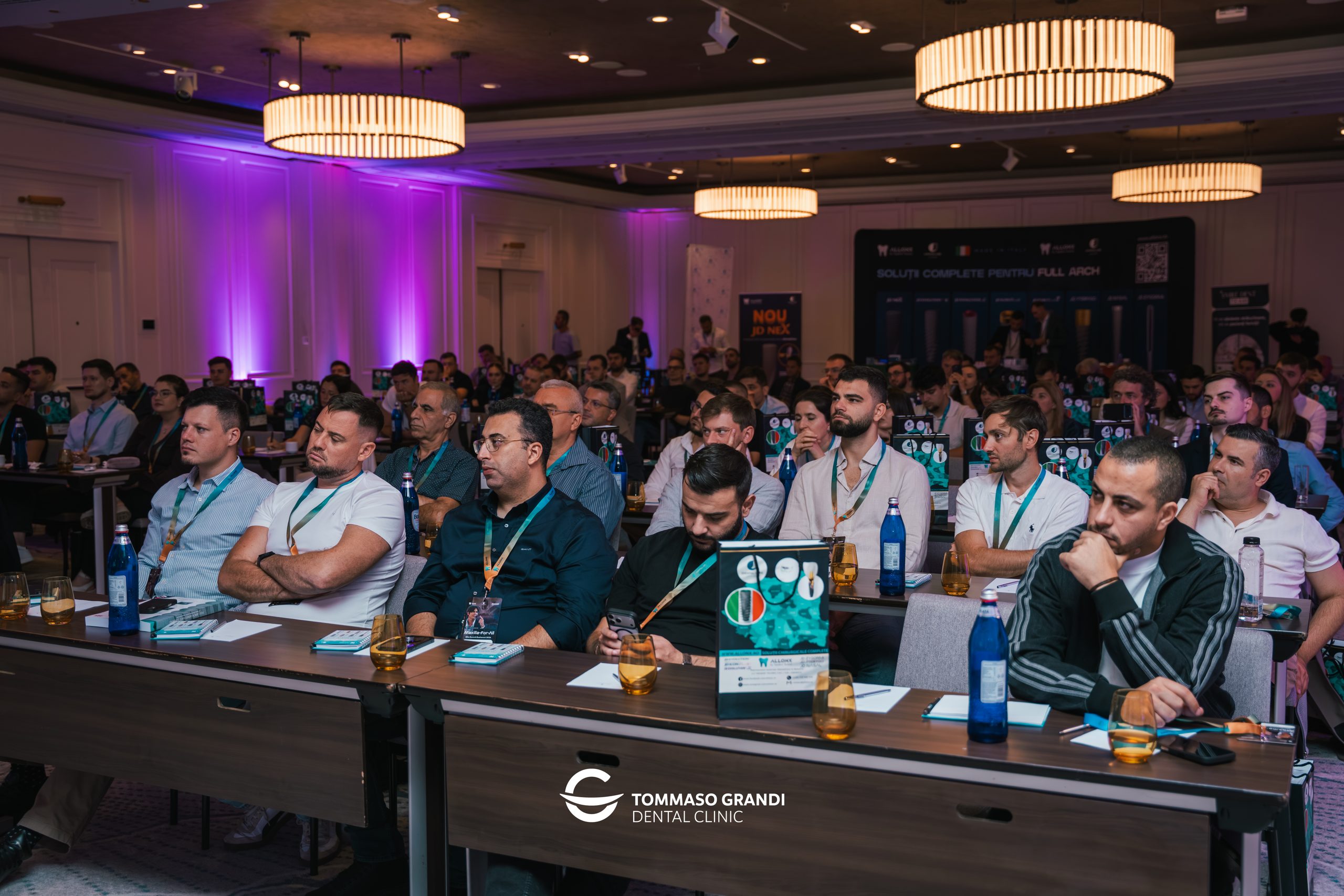
Dr Tommaso Grandi in Bucharest: international training in advanced implantology
Dr Tommaso Grandi’s participation in the Maxilla-For-All Elite Summit is part of the scientific and international teaching activity that has accompanied his clinical practice for many years.
During the day in Bucharest, Dr Grandi shared with an audience of more than 120 surgeons his approach to managing complex implant cases, covering the path from diagnosis and planning through to surgery. The aim was not to present a single technique, but to show how different implant options can be assessed according to each patient’s anatomy and specific characteristics.
This approach reflects the day-to-day work at Tommaso Grandi Dental Clinic, where particular attention is paid to the diagnosis and treatment of complex implant cases.
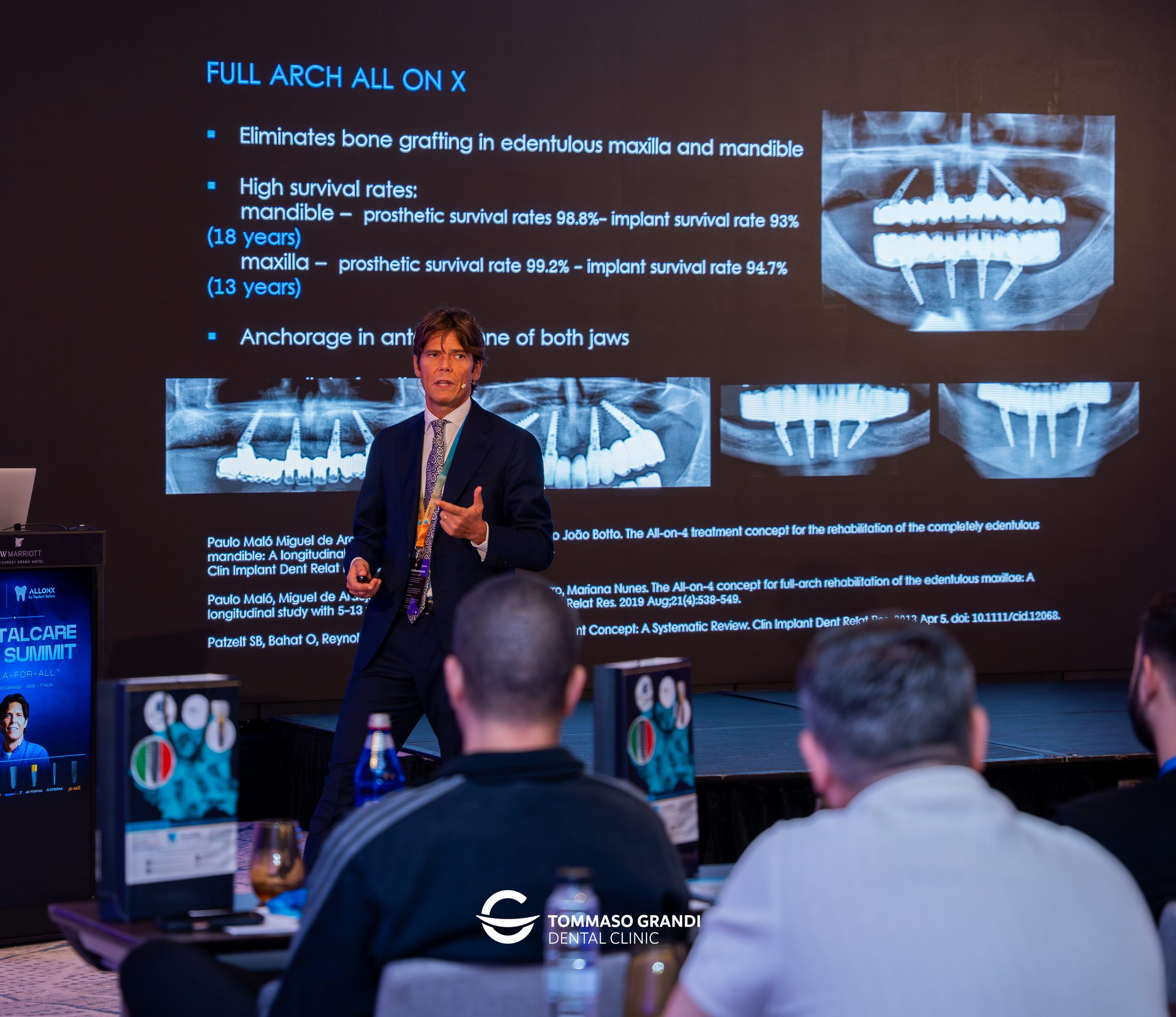
Pterygoid, trans-sinus, trans-nasal and zygomatic implants
During the Maxilla-For-All Elite Summit in Bucharest, Dr Grandi explored some of the techniques used in advanced implantology to find treatment alternatives even when the remaining upper jawbone is severely reduced. Pterygoid implants, for example, seek anchorage in the back of the upper jaw and may be an option in specific situations of posterior atrophy. Our blog has a dedicated article on what pterygoid implants are and when they are used.
Zygomatic implants, on the other hand, use the cheekbone as their anchorage site and may be considered in cases of particularly severe upper jaw atrophy. To understand the indications, features and limitations of this solution, see our complete guide to zygomatic implants.
Alongside these options are trans-sinus and trans-nasal approaches, which further broaden the strategies available to the surgeon when planning complex rehabilitation. The key point, however, remains the correct clinical indication: each technique should be chosen only after careful diagnostic and anatomical analysis of the individual case.
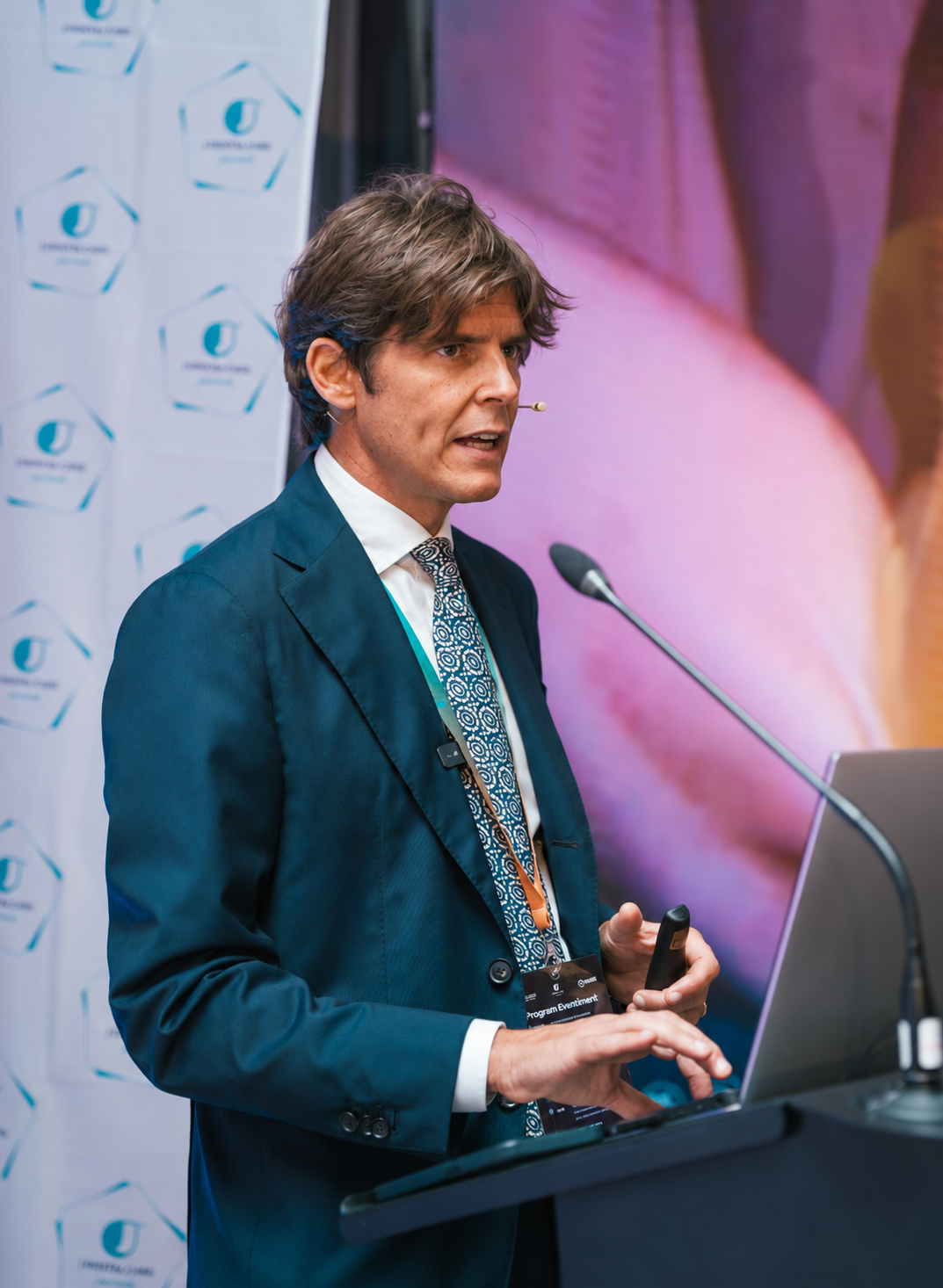
From digital planning to surgery:
a step-by-step approach
Another central theme of the training day was the digital workflow. In complex cases, planning plays a decisive role. Three-dimensional imaging, study of the anatomy and digital tools allow the surgeon to analyse the case in advance and define the most appropriate treatment pathway. During the Summit, Dr Grandi illustrated this process through step-by-step protocols and clinical cases, showing the transition from planning to surgery.
Sharing real cases allowed the surgeons present to look in depth not only at the technical aspects of the different procedures, but above all at the decision-making process that leads to choosing one strategy over another.
More than 120 surgeons for a day of international discussion
The JDentalCare Maxilla-For-All Elite Summit 2026 was also valuable as a forum for professional exchange. More than 120 surgeons from Romania and the Republic of Moldova gathered in Bucharest, united by their interest in advanced implantology and complex rehabilitation. It was a specialist audience with whom Dr Tommaso Grandi was able to share clinical experience, surgical protocols and real cases, contributing to the exchange of knowledge between professionals from different backgrounds. The event was organised with the support of TopDent, JDentalCare’s partner in Romania.
Full-arch treatment and immediate loading in complex cases
Topics discussed in Bucharest also included full-arch rehabilitation and immediate loading. When clinical conditions allow, immediate loading can make it possible to connect a fixed temporary prosthesis to the implants without waiting for the traditional healing period before starting the prosthetic phase. In patients with significant bone atrophy, however, the possibility of using this protocol requires an even more careful assessment of implant stability, anatomy and the general condition of the case. That’s why the Summit’s theme went beyond traditional full-arch treatment: the aim was to explore the diagnostic and surgical tools available to manage even those situations where conventional protocols may not be sufficient.
You can find out more about fixed teeth with immediate loading, in suitable cases on the Clinic’s website.