

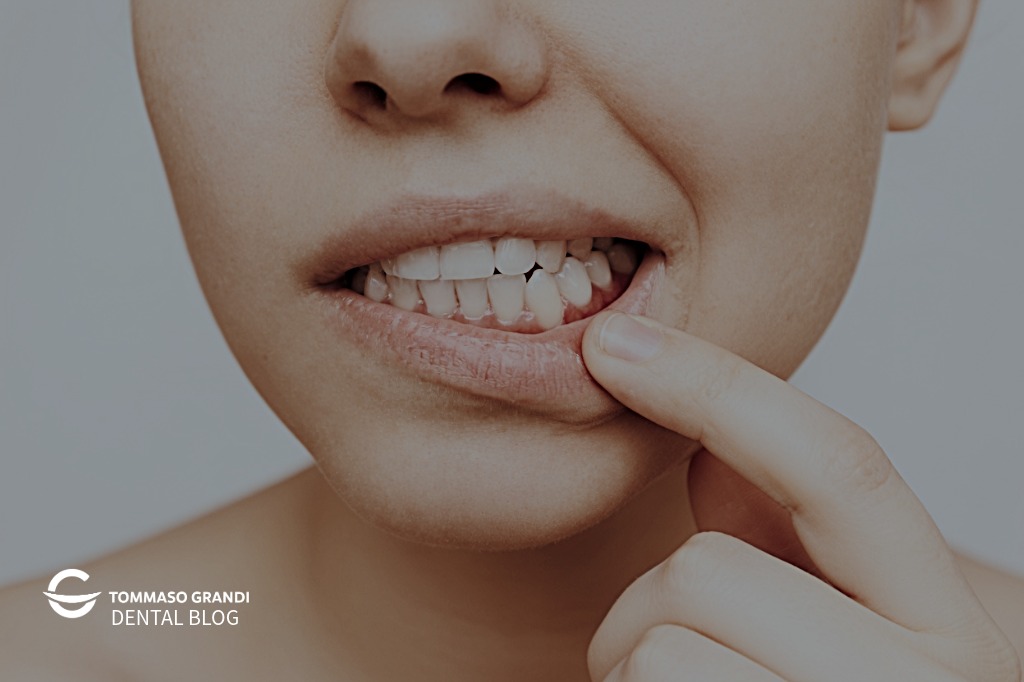
Receding gums describes a situation where the gum “shrinks back” and exposes part of the tooth or root. It isn’t just a cosmetic problem: it’s often a sign that something is irritating or damaging the tissues that support the teeth.
The key point is this: gums don’t grow back on their own like skin. However, it is possible to stop things getting worse, reduce symptoms and, in selected cases, restore some of the coverage with specific treatments.
In short: receding gums can be stabilised and in some cases treated surgically. The key is to understand the cause and act before the problem gets worse.
How to Recognise Receding Gums: Typical Symptoms
You might notice because:
- your teeth look “longer” than usual
- you notice small “steps” near the neck of the tooth
- you’re sensitive to cold, heat or brushing
- your gums bleed when you brush
- you notice bad breath more often
- in some cases: teeth that move or changes in your bite
Warning: if you have pain, frequent bleeding or loose teeth, don’t wait. There may be gum disease (periodontitis) under way. The earlier it is caught, the easier it is to stabilise.
Why Do Gums Recede? The Most Common Causes
There can be several causes, and they often add up.
1. Brushing too hard
This is one of the most common causes: too much pressure, hard bristles, a back-and-forth “sawing” technique. The result is abrasion at the neck of the tooth and chronic inflammation that makes the gum recede.
2. Gingivitis and periodontitis
Plaque and tartar inflame the gum (gingivitis). If the inflammation goes deeper it can become periodontitis, with loss of supporting bone. In these cases gum recession is often accompanied by bleeding, gum pockets, bad breath and loose teeth.
3. Bruxism and bite stress
If you clench or grind your teeth, the forces on the tissues increase: over time recession and intense sensitivity can appear.
4. Smoking
Smoking worsens gum health and masks the symptoms: gums may bleed less, but the disease still progresses – often faster.
5. Crooked teeth or a tight frenum
In some areas the gum is thinner and more fragile: it takes very little for it to start receding, even without inflammation.
6. Age and genetic predisposition
Recession becomes more common with age, especially in people with a genetic predisposition or naturally thin gum tissue.
Receding Gums: Can They Be Treated? What Really Works
It depends on the cause and how advanced the situation is. Here is the standard approach.
Step 1 – Diagnosis: understanding why it’s happening
The right question isn’t “what’s the quickest remedy?”, but: what is the cause in your specific case? Without a diagnosis, even a top-quality cream or an expensive mouthwash won’t solve the problem.
At the visit we assess the level of inflammation, any periodontal pockets, tartar below the gumline, your bite and any bruxism, and take X-rays to check bone support.
At Tommaso Grandi Dental Clinic in Modena, every treatment pathway starts with a full periodontal assessment: we gather all the information needed to understand the real cause of gum recession and propose a clear, personalised treatment plan.
Step 2 – Professional hygiene and periodontal treatment
If there is inflammation or periodontitis, the priority is to remove plaque, tartar and bacteria below the gumline. In some cases deeper treatment (root planing/scaling) is carried out and a long-term maintenance programme is set up.
Step 3 – Changing habits (often decisive)
This is often where the most significant results are achieved: a soft toothbrush, correct technique, floss and interdental brushes, and a toothpaste for sensitive teeth. If there is bruxism: a custom-made night guard and control of bite forces.
Step 4 – Mucogingival surgery (when the root needs covering)
If the recession is significant for appearance, sensitivity or the risk of root decay, a gum graft or root coverage technique may be considered. It isn’t always necessary, but it is an effective solution in selected cases.
Home Remedies: What You Can Do Now (and What to Avoid)
What you can do now
- Change your toothbrush: always soft
- Reduce the pressure (if the bristles splay, it’s too much)
- Use a toothpaste for sensitive teeth for 2–4 weeks
- If your gums bleed: don’t stop cleaning – clean more thoroughly and more gently
What to avoid at all costs
- A hard toothbrush “to clean better”: it makes things worse
- Harsh mouthwashes used long term without your dentist’s advice
- Products that claim to make gums grow back: no cream can regenerate gum tissue
When to Really Worry: Warning Signs
Book a check-up straight away if you notice any of these signs:
- Frequent bleeding during or after brushing
- Persistent bad breath despite good oral hygiene
- Pain or discomfort that doesn’t go away
- Teeth that seem to move
- Gaps between teeth getting bigger
- Sudden, severe sensitivity
- Recession that gets worse within a few months
⚠️ These symptoms may indicate periodontitis: a disease that, if untreated, can eventually lead to tooth loss. The earlier it is caught, the easier and less invasive the treatment.
Receding Gums and Tooth Loss: What’s the Link?
Receding gums don’t automatically mean “I’m going to lose my teeth”. But if the cause is periodontal and isn’t treated, over time bone support decreases and teeth can become loose.
The good news: today there are effective treatment pathways to stop the inflammation, stabilise the tissues and – if necessary – plan reliable rehabilitation even in more complex cases.
At Tommaso Grandi Dental Clinic in Modena we also manage advanced periodontal cases, with a multidisciplinary approach that combines periodontology, implantology and mucogingival surgery. The aim is always the same: to keep your natural teeth for as long as possible.
FAQs – Frequently Asked Questions About Receding Gums
Do receding gums grow back?
Generally not: gums don’t grow back on their own. However, it is possible to stop further recession and, in selected cases, cover the exposed root with dedicated surgical techniques (gum grafting).
Do receding gums hurt?
They can cause sensitivity and discomfort, especially with cold or when brushing. If there is active inflammation, they may also bleed often.
Can mouthwash heal receding gums?
Mouthwash can help reduce bacteria only as a support to treatment; it doesn’t address the cause and won’t move the gum back to its original position.
If my gums bleed, should I brush less?
No: they often bleed because of inflammation. You need to clean more thoroughly and more gently, and book a professional assessment as soon as possible.
Is periodontitis always visible?
Not always: sometimes it’s “silent” and progresses without obvious symptoms. That’s why regular check-ups with pocket probing and, if necessary, X-rays are essential.
Medical disclaimer: the information in this article is for general purposes only and does not replace the advice of a dentist. Always consult your dentist or a periodontal specialist for a personalised assessment.
Would you like to understand why your gums are receding?
If you notice longer-looking teeth, sensitivity or bleeding, the most useful step is a targeted assessment: understanding the cause and setting up a plan straight away to stop the problem.
At Tommaso Grandi Dental Clinic in Modena we explain clearly what is happening and which solutions are genuinely suitable for your case.
Book your periodontal assessment.