

Once your dental implants are in place, care doesn’t stop at the clinic. Home hygiene becomes essential to make the result last and to prevent complications such as peri-implantitis.
Many patients think that because implants are “artificial” they need less attention. In fact they need even more careful cleaning than natural teeth, because they lack the periodontal ligament that protects natural teeth.
Why home hygiene matters so much
Bacterial plaque builds up easily around implants. If it isn’t removed every day, it can cause gum inflammation and, over time, lead to bone loss around the implant.
Good home hygiene, combined with regular check-ups, is the most effective way to protect your investment and keep your implants healthy for many years.
Recommended daily routine
Here’s how to organise cleaning your implants at home:
Morning and evening
- Use a soft toothbrush (manual or electric) with a gentle but thorough technique.
- Brush along the gumline around the implant too, using light circular or vertical movements.
- Don’t press too hard: the aim is to remove plaque without irritating the tissues.
Interdental cleaning (the most important part)
A toothbrush alone isn’t enough. It’s essential to clean the spaces between the implant and natural teeth, or between one implant and another.
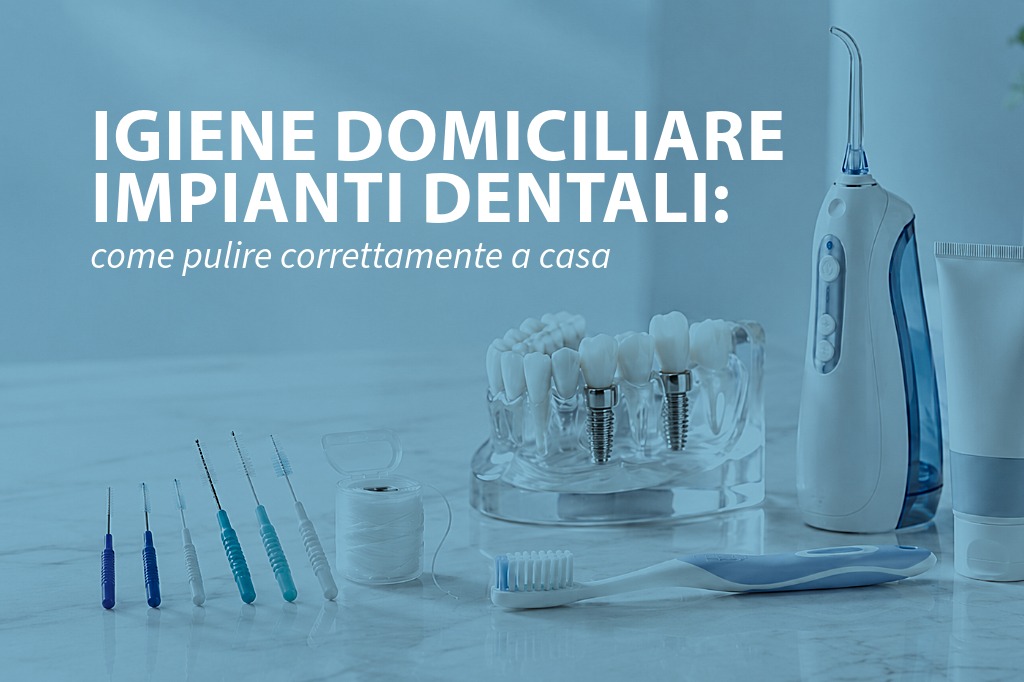
- Interdental brushes: the most widely recommended tool. Choose the size your dentist suggests.
- Implant floss or threader floss: especially useful at the back of the mouth.
- Water flosser: a very useful addition, especially if you have bridges on implants or a full-arch fixed bridge. It helps remove food debris from deeper areas.
Recommended products
- Soft or electric toothbrush with a small head
- SuperFloss interdental floss
- Water flosser (optional but very useful)
- Mouthwash without alcohol (if recommended by your dentist)
- Gentle toothpaste
Your dentist or hygienist will tell you exactly which tools to use for your type of prosthesis (single crown, bridge, full-arch “Toronto” bridge, etc.).
Mistakes to avoid
- Using hard toothbrushes or overly aggressive bristles
- Skipping interdental cleaning
- Using traditional floss incorrectly (it can injure the gum)
- Neglecting to clean the underside of the prosthesis (especially with bridges and Toronto bridges)
- Using harsh mouthwashes without advice
Signs that something is wrong
Even with good hygiene, it’s important to look out for these signs:
- Bleeding when brushing or using an interdental brush
- Red or swollen gums around the implant
- Persistent bad breath
- Discomfort or pain when pressing
- Movement of the crown or prosthesis
If you notice any of these symptoms, don’t wait for your next check-up: contact your dentist.
Small habits, big results
Caring for implants at home doesn’t have to be complicated, but it does need to be consistent. Just a few minutes a day, done properly, can greatly reduce the risk of future problems.
Remember: implants are a reliable, long-lasting solution, but their long-term success depends largely on how you care for them at home every day.
Would you like personalised guidance?
At your check-up, our team will show you exactly how to clean your implants according to your type of prosthesis. We’ll also recommend the most suitable tools and support you over time.
Book a hygiene and check-up appointment to receive personalised advice on your home care routine.