

The smile you’ve always wanted, discreetly
Have you ever thought about straightening your teeth but dismissed the idea because you don’t want metal braces as an adult? Today there is a solution that aligns your smile while remaining virtually invisible: clear aligners. But how much do they really cost, and are they worth the investment?
What clear aligners are and how they work
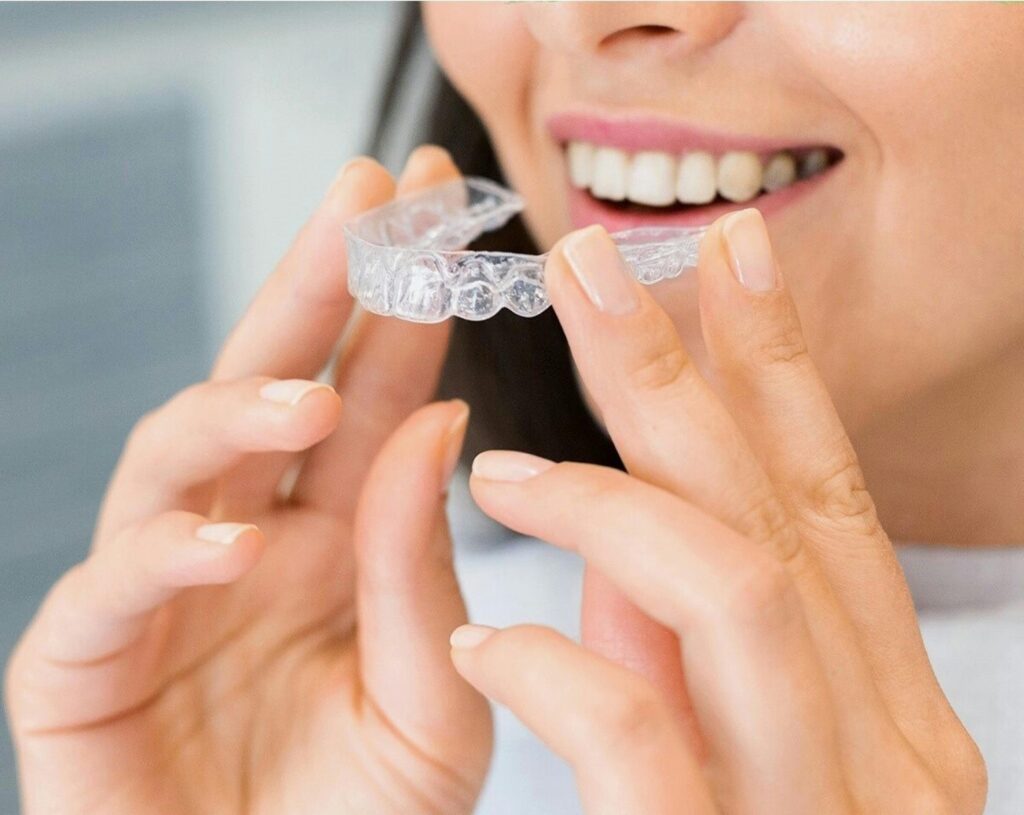
Clear aligners are removable orthodontic trays, custom-made from a 3D scan of your dental arch. Unlike traditional fixed braces, they have no brackets or wires: teeth are moved by a series of progressive aligners, changed every 1–2 weeks, towards a final result that is planned digitally from day one.
Why more and more patients choose them
- Appearance: virtually invisible in everyday use
- Comfort: no wires or brackets to irritate cheeks and lips
- Hygiene: they come out for eating and brushing
- Predictability: the planned result is simulated on a computer before treatment even starts
How much they cost (and why it’s an investment)
In Italy, clear aligner treatment generally costs between €1,500 and €6,000, depending on how complex the case is and how long treatment lasts. There is no fixed price for everyone: a real estimate can only be given after a specialist visit with a digital scan of your arch.
What affects the price
Complexity of the case
Mild cosmetic crowding needs fewer aligners and fewer months of treatment than a more marked malocclusion.
Length of treatment
Simple cases can be completed in around 4–6 months, while complex ones may take 18–24 months: more aligners mean a higher cost, but also a more thorough and lasting result.
Technology and system used
Not all aligners are the same: systems with stronger clinical tracking and advanced 3D simulation software allow more precise tooth movement.
The clinician’s experience
A digital orthodontic treatment plan requires specific skills: the quality of the initial diagnosis affects the final result, not just the price.
Good to know: be wary of “standard” quotes given without a visit. A well-designed clear aligner treatment starts with a thorough study of your bite, not a generic price list — and that attention to detail is what makes the difference between a straight smile and a genuinely healthy one.
Who they are suitable for
Aligners are effective for most cases of mild to moderate misalignment: crowding, small gaps between teeth and mild crossbite. In more complex cases they can still be a valid option, to be assessed case by case with an orthodontic specialist.
Frequently asked questions
For the first few days after each change of aligner it’s normal to feel some light pressure, a sign that your teeth are moving. It isn’t real pain, but a sensation that usually eases within 1–2 days.
For treatment to work, aligners need to be worn for at least 20–22 hours a day, taking them out only to eat and to clean your teeth.
It depends on your private health insurance: some dental policies partly reimburse orthodontic treatment. It’s worth checking the terms of your policy before you start.
There is no one-size-fits-all answer: it depends on the type of malocclusion, the patient’s daily habits and aesthetic goals. A specialist assessment helps you understand which option is likely to give the most stable long-term results.
Find out what your treatment would cost
Every smile is different, and so is the path to a straight one. At Dr Tommaso Grandi’s clinic in Modena you can book an assessment visit with a digital scan, to receive a personalised treatment plan and a clear, transparent quote with no surprises.