

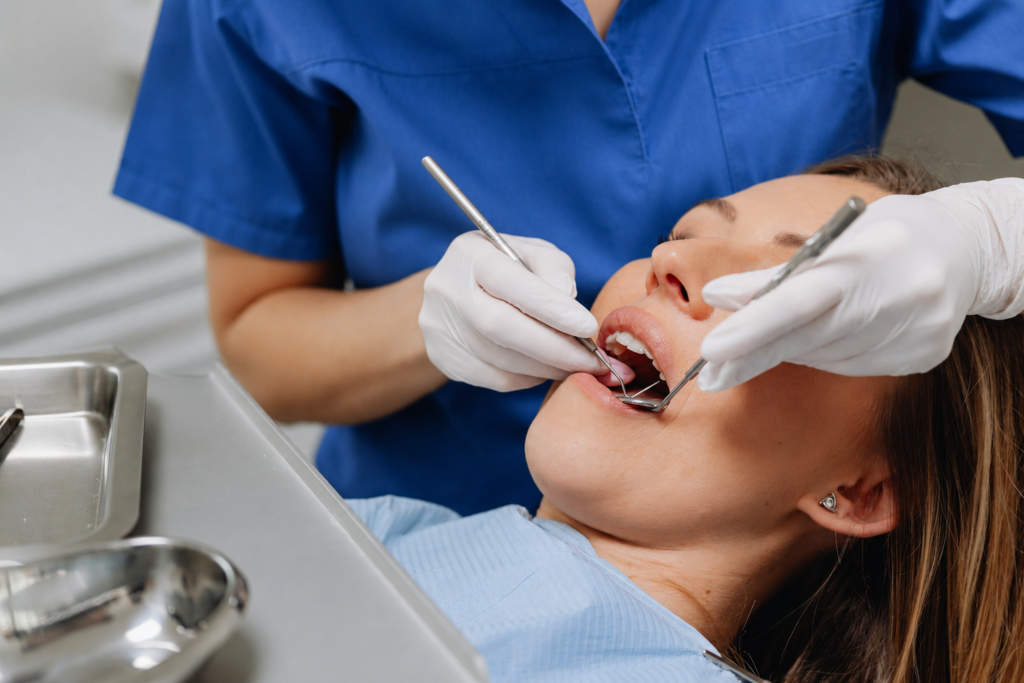
You have had dental implants and now you wonder whether you really need to go back to the dentist regularly. It is a very common question among patients.
After treatment is complete, many people tend to stop attending check-ups. Some feel well and think they are no longer needed; others put them off because they do not want further expense. In fact, regular check-ups are an essential part of helping the result last over time.
Why check-ups matter
Even when you feel no discomfort, things can happen around implants that only a check-up can identify in time.
Among the most frequent are:
- Inflammation of the tissues around the implant (peri-implantitis)
- A build-up of plaque and tartar in areas that are difficult to clean on your own
- Progressive bone resorption
- Loosening of screws or components of the prosthesis
Catching these problems while they are still at an early stage makes it possible to deal with them with simple, minimally invasive treatment. If they are neglected, there is a risk of compromising the stability of the implant.
How often should you have check-ups after implants?
There is no single rule that applies to everyone, but in general the guidance is as follows:
- In the first year after the procedure: a check-up every 3–6 months is usually advised
- From the second year onwards: in most cases, once a year is enough
In the early period the tissues and bone are still adapting to the implant, so it is important to monitor the situation more often. Later, if everything is going well, check-ups can be spaced out, but they should not be dropped altogether.
Your dentist will be able to tell you the frequency most suited to your specific case, according to the condition of your mouth and the type of prosthesis you have.
What is checked during the visit
A routine check-up after implant placement generally includes:
- An assessment of the health of the gum and the tissues around the implant
- Professional removal of plaque and tartar
- A check of the stability of the crown or prosthesis
- X-rays, if needed, to assess the condition of the bone
- Personalised advice on day-to-day hygiene
The visit is usually brief and well tolerated. Its main purpose is to keep the situation under review and to intervene promptly if needed.
What happens if you skip check-ups
Skipping check-ups does not necessarily mean you will have immediate problems. Over time, however, the risk increases that small inflammations or build-ups of plaque will turn into more serious situations, which may require more complex and costly treatment.
Many patients who lose an implant later admit that they did not go back to the dentist after the first few months. In most cases these were problems that, had they been identified in time, could have been avoided.
Practical advice for looking after your implants
Here are some useful suggestions:
- Ask your dentist for a personalised recall programme
- Report any discomfort, bleeding or feeling of movement straight away
- Keep up good daily hygiene, including any recommended tools (interdental brushes, floss or a water flosser)
- Do not put off the check-up just because “you can’t feel anything”
Looking after your implants over time means protecting the investment you have made and continuing to enjoy the benefits you have gained: chewing comfortably, smiling with confidence and feeling better in everyday life.
Do you need a check-up?
If you already have dental implants and cannot remember when you last had a check-up, now is a good time to arrange one.
At our clinic we assess each case carefully and, together with the patient, agree a personalised maintenance plan that is realistic and sustainable.
Book a check-up and review the situation with our team.